
How many restrooms does a marathon need in Boston?
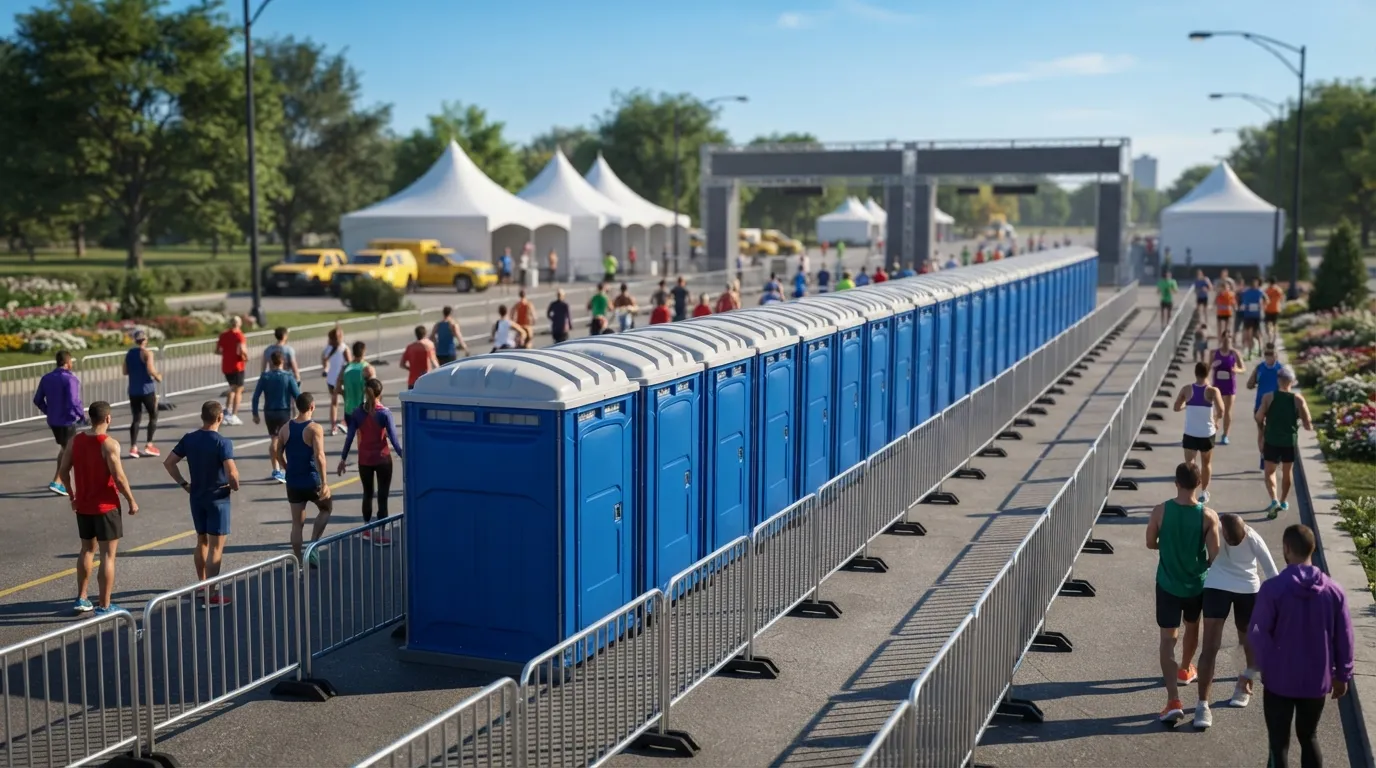
Start with the OSHA 1926.51(c) ratio, then add units for spectators and volunteers, because a race is not a job site with one crew, it is thousands of people arriving at once. That ratio calls for 1 toilet per 20 workers at 20 or fewer, then 1 toilet and 1 urinal per 40 up to 200. Race organizers usually run heavier than that minimum, because runners cluster hard in the twenty minutes before a gun goes off. For a corral of 2,000 runners, plan on 25 to 30 standard porta potty rental units at the start alone, split into two or three clusters so lines do not merge. Add units at every water stop and at the finish chute, where finishers and family members bottleneck for an hour. Boston races that draw spectators along the route should also budget units at mile markers, not just start and finish. ADA Standards section 213.2 requires that at least 5 percent of a cluster be accessible, never fewer than one, so a 20 unit cluster needs at least one ADA accessible porta potty and a 40 unit cluster needs two. Check the how many porta potties do I need guide for a fuller breakdown by attendance, and see OSHA portable toilet requirements for the full ratio table.
What does restroom rental cost for a race in Boston?
A weekend race is priced differently than a weekday job site, because setup and teardown happen fast and everything gets serviced once, hard, before the gun. Standard units run a weekend rate, and event pricing for high-traffic race day rentals typically runs 200 to 800 dollars per unit depending on service level and cluster size. ADA units run higher per unit for the same weekend window. See the table below for how the categories stack.
| unit | weekend rate range |
|---|---|
| standard unit | 125 to 400 |
| ADA unit | 199 to 300 |
| deluxe flushable | 85 to 1200 |
| restroom trailer | 900 to 3000 |
Bigger races with VIP tents or finish line hospitality often add a restroom trailer rental near the finish line for sponsors and elite athletes, while the general field uses standard clusters. A 4 stall restroom trailer handles moderate VIP traffic; an 8 stall restroom trailer handles a bigger hospitality footprint. Full pricing detail, including delivery fees, lives on the restroom trailer rental cost page and the general porta potty rental cost page. Race organizers on a tighter budget should compare day rates against weekend rates on the porta potty rental per day page before locking a contract, since a single-day rental sits in a different price band than a full weekend hold.
Can Boston Porta Pros handle road closures and course logistics?
Yes, and course logistics are where most race sanitation plans fall apart, because delivery trucks need real clearance and course marshals need power for timing gear along the route. A roll-off style delivery truck needs about 60 feet of straight clearance behind it to set units down safely, which matters on narrow Boston side streets near a start line. Plan drop zones before race morning, not during it. If your race uses timing mats, mile marker signage, or a lit staging area before dawn, you likely need a generator or a temporary power pole run to the finish line tent. Knowing how to brace a temporary power pole on race day means setting the base plate on level, stable ground per ADA Standards section 302.1's stability principle, guying it against wind load, and keeping the cable run clear of the runner lane and any barricade line under OSHA 1926.202. Pair power with a light tower rental for a predawn start corral. Course marshals and medical tents also need crowd control barrier rental or a full temporary fence rental to keep spectators off the course near tight turns. If your race pulls runners from Somerville, 7.3 miles northwest of Boston, or Cambridge, 7.6 miles northwest, factor that drive time into your delivery schedule so trucks are not stuck in race-morning traffic. Boston Porta Pros routes delivery trucks around road closures using the city's published closure map, arriving before barricades go up.
How far in advance should we book race restrooms?
Book as soon as your course map and permit are set, ideally 60 to 90 days out for a race over 2,000 runners. Boston road closures and cluster placement both depend on the permit, and units get scarce close to big race weekends.
Do we need ADA units even if no wheelchair racers are registered?
Yes. ADA Standards section 213.2 requires at least one accessible unit per cluster regardless of registration, because spectators and volunteers also need access. Skipping it risks a permit issue on race day.
Can units be moved mid-race for a rolling road closure?
Units at fixed clusters usually stay put; the road closure moves around them instead. For point-to-point races, we place separate clusters at each major junction rather than relocating trucks mid-event.
What about handwashing at food and medical tents?
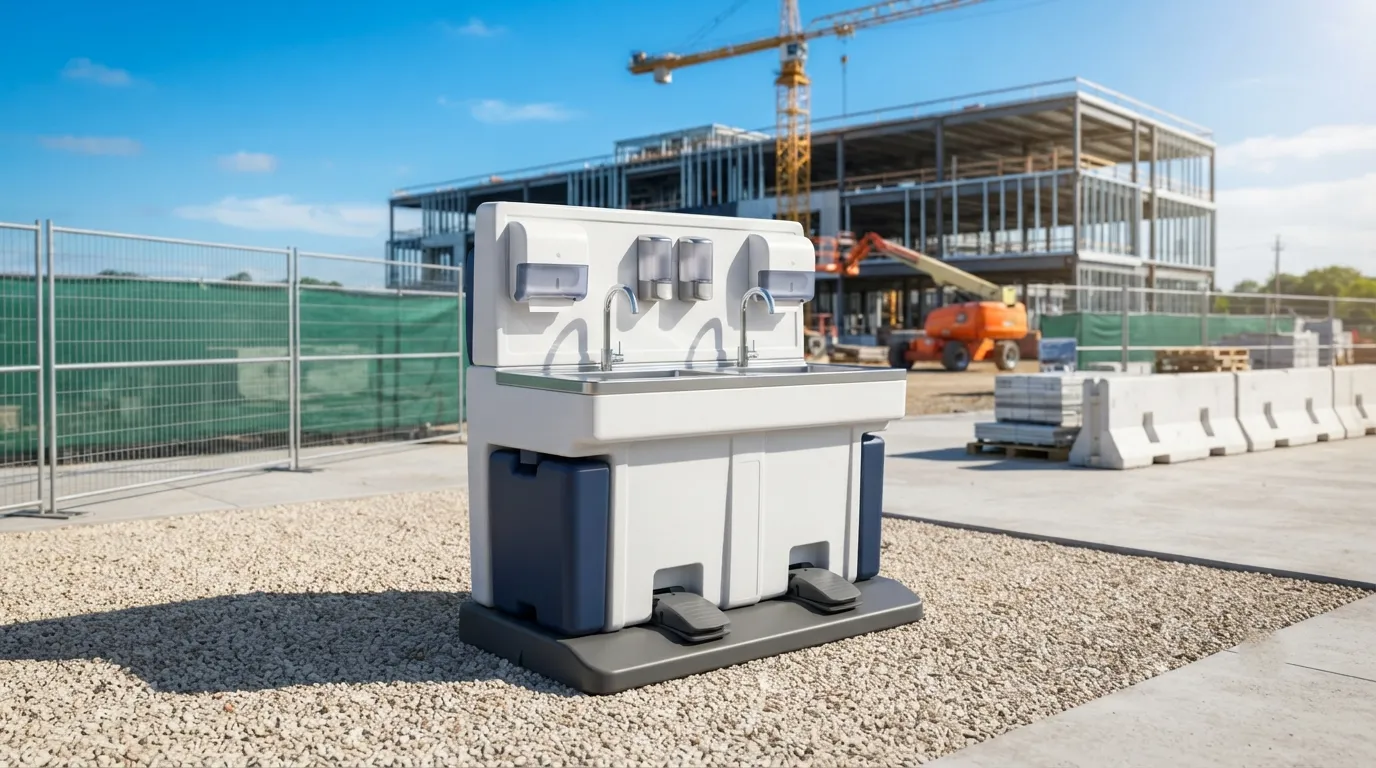
Medical tents and food vendors need washing stations under 29 CFR 1910.141(d)(2), which requires soap and towels, not sanitizer alone. See handwashing station rental for unit options and placement.
How does a marathon differ from a smaller local race?
Scale and course length. A marathon spans miles and needs clusters at aid stations along the whole route, while a 5K needs one strong cluster at start and finish. Both follow the same OSHA 1926.51(c) ratio math, just at different total counts.
Next step
Get a delivery date
Tell us the address, the dates and the headcount. We size the order and confirm the route.