
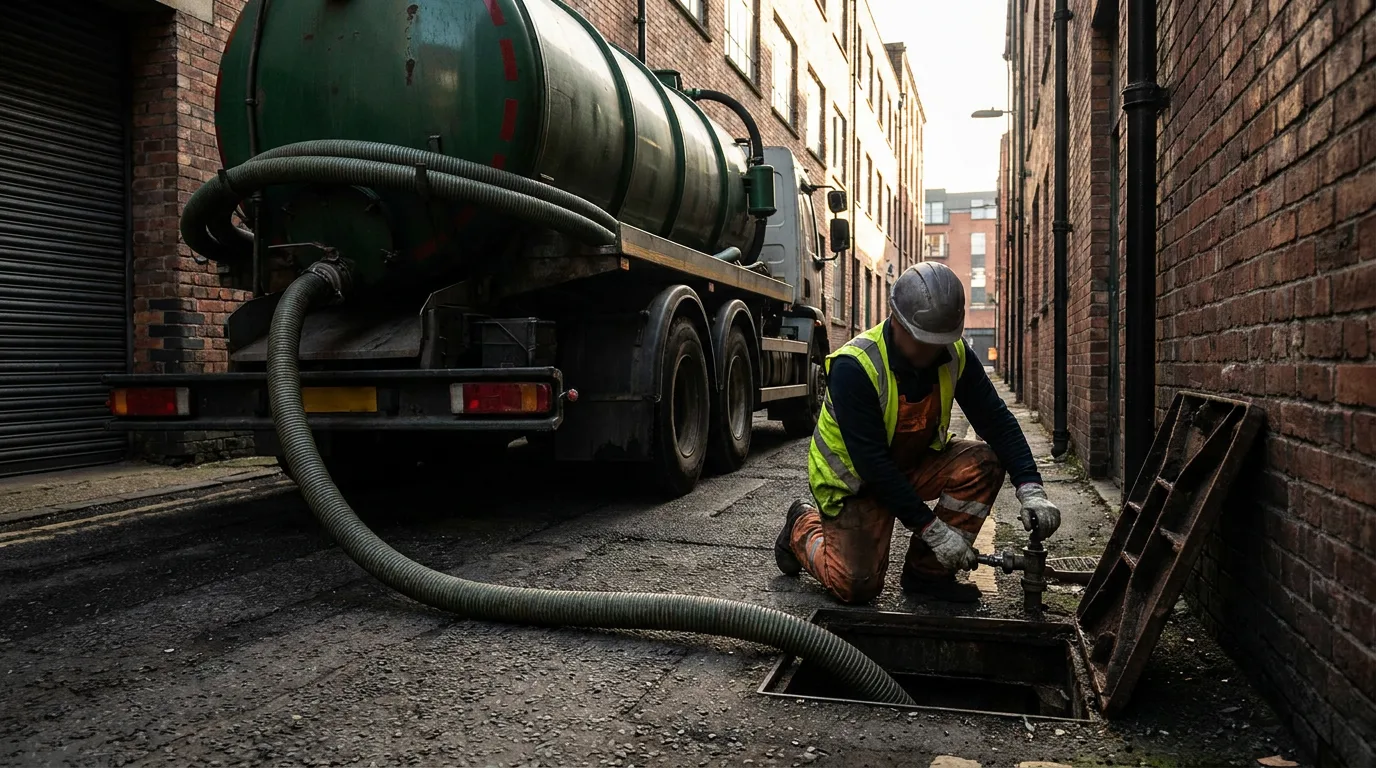
How Often Does a Septic Tank Need Cleaning?
The 3 to 5 year range is a starting point, not a rule that fits every house. Tank size and how many people live under your roof drive the real number. A couple in a Dorchester two-family with a full-size tank might go the full 5 years between visits, similar to what we see across our service areas. A crowded household running laundry and dishwashers all day pushes solids into the tank faster, and that shortens the interval. If you're not sure which end of the range applies to you, our page on how often to pump a septic tank walks through the variables in more detail, and our septic tank warning signs page covers what happens if you wait too long. Boston's older housing stock, a lot of it built before modern septic design was standard, means some systems carry smaller tanks than a comparable new build would use. That's one more reason the 3 to 5 year window matters more here than a blanket rule would. If you've never had the tank pumped and don't know its size, that's the first thing to find out before setting a schedule, and our septic tank warning signs page linked above can help you spot trouble in the meantime, alongside our broader porta potty rental services for job sites in transition.
What Happens If I Wait Too Long Between Pumpings?
Solids build up past the point the tank can hold, and they start moving into the drain field where they don't belong. Once that happens, you're looking at a repair job instead of a routine pump-out, the kind of surprise that also comes up on our septic tank pumping cost page when people ask why an emergency visit costs more than a scheduled one. Slow drains, gurgling pipes, and standing water near the tank are the usual warning signs, and they mean you've likely gone past the recommended interval. This is different from a grease trap, which gets pumped based on fat and solid buildup reaching 25 percent of the liquid depth rather than a fixed time interval. Restaurants and commercial kitchens in Boston dealing with that specific problem should look at grease trap pumping instead of standard septic service, and any kitchen staff on site still need proper facilities under our handwashing station rental options. For homeowners, catching the problem early with septic tank cleaning costs a lot less than fixing a failed drain field. If you're already seeing signs of trouble, don't wait for the next scheduled visit. Emergency service exists for a reason, and our emergency septic service page covers what that looks like when a system backs up without warning, the same way our emergency porta potty rental page covers sudden restroom needs on a job site.

What Does Septic Pumping Cost in Boston?
Pricing depends on tank size, access, and how much buildup there is, but here's what a standard visit runs:
| Service | Duration | Typical Range |
|---|---|---|
| Septic pumping | Day rate | $150 to $300 |
| Septic pumping | Weekend rate | $50 to $150 |
Full details, including how tank size and drive distance affect the quote, are on our septic tank pumping cost page, and you can request a quote once you know roughly what your system needs. If you're weighing a temporary alternative while your system gets serviced, a holding tank rental can bridge the gap for a job site or a property that's between systems, and pairing it with a standard porta potty rental covers the rest of the crew. For general septic pumping service scheduling in Boston, we work around your timeline, not the other way around, whether that's a home on a quiet street or a construction dumpster rental job running at the same time.
Should I Get My Tank Inspected Even If It's Not Due for Pumping?
Yes, especially if you've never had a professional look at the system or you just bought the house. An inspection catches problems the pumping schedule alone won't, much like a walk-through before you book a portable restroom rental for a busy site. Slow drains, a soggy patch in the yard, or a smell near the tank are all worth a look regardless of where you are in the 3 to 5 year cycle. This matters more in Boston than it might elsewhere, since a lot of the housing stock here predates modern septic standards, and older tanks sometimes need more frequent attention than a newer system would. If you're managing a construction project instead of a home, sanitation planning looks different: check our construction site services page, our how many porta potties do I need guide, or the OSHA portable toilet requirements guide, since job sites fall under OSHA 1926.51(c) rather than residential septic rules. Homeowners in nearby Somerville, about 7.3 miles northwest of Boston, and Cambridge, roughly 7.6 miles northwest, deal with the same older-housing considerations we see across Boston proper, and renovation crews in either town can check our home renovation porta potty page too.
How do I know what size tank I have?
Check your last pumping receipt or ask the company that serviced it before. If you have no record, a technician can measure it during the first visit. Tank size is the single biggest factor in your pumping interval, so it's worth confirming early rather than guessing.
Does household size actually change the schedule?
Yes. More people means more water and more solids going into the tank daily. A household of six will generally need pumping closer to the 3-year mark than a household of two with the same size tank.
Can I pump the tank myself to save money?
No. Septic pumping requires a vacuum truck and proper disposal, which isn't something a homeowner can do safely or legally. Hire a licensed service for this.
What's the difference between septic pumping and cleaning?
Pumping removes liquid and solids from the tank. Cleaning sometimes includes scraping solids off tank walls. Most routine visits are pumping only, which is what most tanks need on a 3 to 5 year cycle.
Is there a way to make the interval last longer?
Cutting back on water use and avoiding flushing anything but toilet paper helps. Garbage disposals add solids fast, so households with heavy disposal use often need more frequent pumping than the standard range suggests.
Next step
Get a delivery date
Tell us the address, the dates and the headcount. We size the order and confirm the route.