
How many porta potties do I need for my Boston job site?
OSHA 1926.51(c)(1) sets the baseline: provide one toilet facility for 20 workers or fewer, then one toilet seat and one urinal per 40 workers from 20 up, and one toilet seat and one urinal per 50 workers at 200 or more. Count your peak crew size, not your average. If you're running a construction site in Boston with crews that swell mid-project, plan for the larger crew. Event restroom rental follows different math because foot traffic fluctuates wildly. Ask us to size your job; we've done thousands and the error costs more than the phone call. A standard porta potty handles 1 to 2 people per day in a typical work environment. Bigger crews or longer rental periods make a deluxe flushable model worth considering because the extra comfort cuts complaints.
What's the real difference between standard and deluxe porta potties?
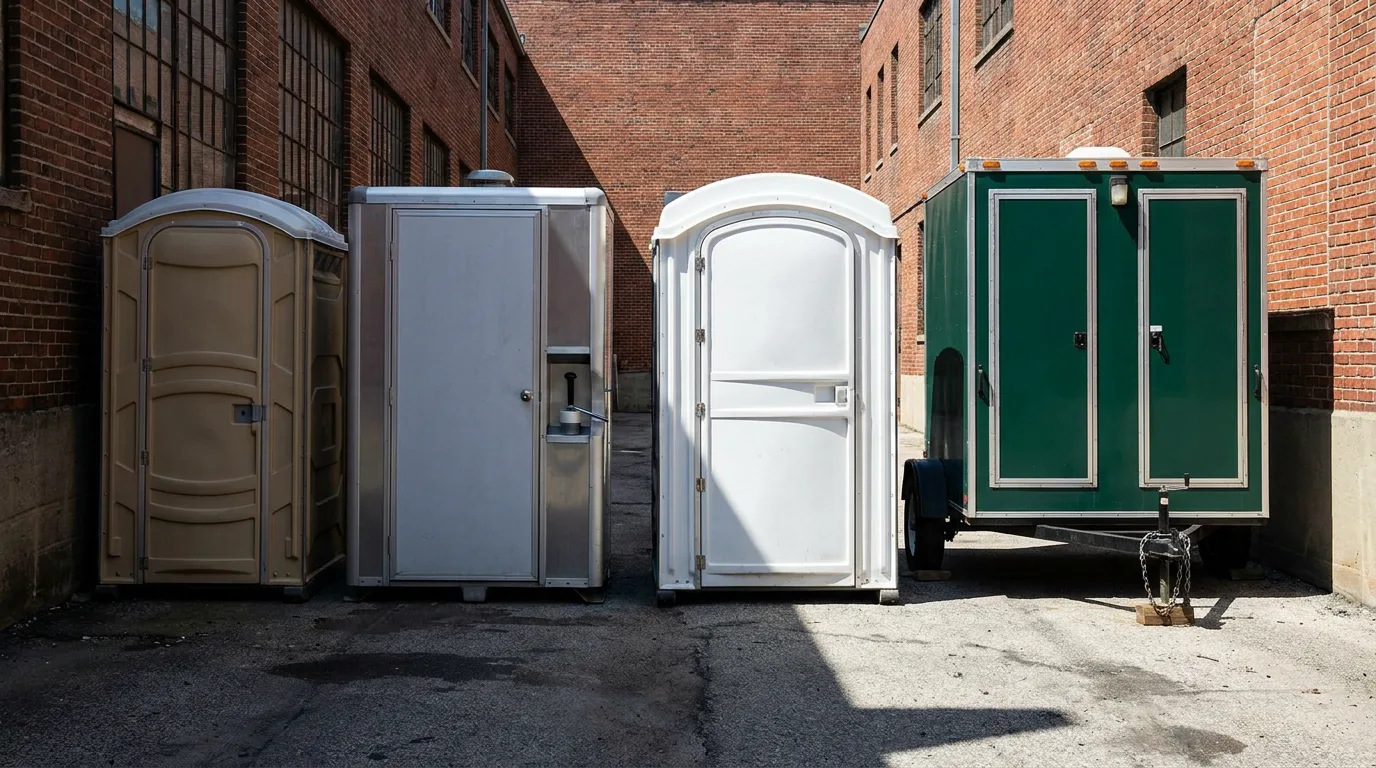
A standard unit is your no-frills toilet: seat, cover, hand sanitizer and a 60 to 70 gallon tank pumped once a week under ANSI/PSAI Z4.3 baseline service. Deluxe flushable models add an actual flush mechanism, soap dispenser, running water and a hands-free faucet. The tank is bigger and the interior surfaces are smoother and less likely to stain. If your crew works eight-hour shifts and you care about morale, deluxe justifies itself fast. If it's a two-day dumpster job with part-time labor, standard cuts costs. ADA accessible porta potties meet ADA Standards section 213.2, meaning at least 5 percent of clustered units must be accessible, with a 60 inch diameter turning circle and 36 inch minimum clear width. Every project in Boston has different constraints; what matters is matching the unit to the reality of how many people use it and for how long.
How often does Boston Porta Pros service and clean porta potties?
We service once per week as baseline. That means pumping the tank, restocking toilet paper and hand sanitizer, and cleaning the seat and interior. If your crew is small and your project is short, weekly is standard. Busier sites need twice-weekly or even daily service. Construction sites with 50 or more workers should move to a restroom trailer instead of multiple portable toilets, because trailers have flushing systems, multiple stalls and dedicated handwashing. Handwashing stations are required where employees apply paints, coatings, herbicides or insecticides under OSHA 1926.51(f)(1), and they must be stocked with soap and towels or hand drying devices per 29 CFR 1910.141(d)(2). Neglecting either rule stops a job. We schedule service around your crew's hours so nothing backs up on a Friday afternoon.
What equipment do I rent for a Boston renovation or demolition?
Most home renovations need a roll-off dumpster, a standard porta potty and sometimes a storage container. A dumpster needs about 60 feet of straight clearance behind the truck for delivery. If you're in Everett (7.3 miles north) or Chelsea (7.5 miles north), crews often rent a 20-yard dumpster for a renovation lasting one to two weeks. Demolition jobs in Boston add temporary fencing to keep debris contained and the public out. If you're storing tools or materials between shifts, a storage container rents monthly and costs far less than a trailer. Pair that with a handwashing station if OSHA rules require it. Septic pumping isn't usually part of a renovation unless you're working on a rural property.
How much does a porta potty cost per day versus per week?
Daily rates are higher per-day than weekly rates; the math encourages longer rentals. A standard unit costs more on a weekend premium than it does during the week. If you need it for three days or fewer, ask about our weekend rate. For a full week, weekly pricing saves money. Monthly rentals of all types cost less per week than either. Call for a quote on your exact dates and location within Boston.
Can I place a porta potty in the street or public right of way?
Placement in the public right of way needs confirming with the city. We know the spots that work and the paperwork, but the rule is local. Tell us your address and we'll verify before you rent.
What goes into a dumpster and what doesn't?
Drywall, lumber, roofing, cardboard, brick and concrete are standard. Do not put asbestos, paint cans, batteries, refrigerant, tires or hazardous waste in a dumpster. Some items need licensed disposal. We'll advise when you describe the job.
Why do I need handwashing if I have a porta potty?
OSHA 1926.51(a)(1) requires an adequate supply of potable water in all places of employment. A porta potty has no water. Handwashing stations have it. If your crew washes hands after paint or herbicide work, OSHA 1926.51(f)(1) applies and you must provide soap and a towel or hand dryer. A portable sink meets the law; hand sanitizer alone does not.
What's the difference between septic pumping and a holding tank rental?
A residential septic tank is typically pumped every 3 to 5 years because it fills slowly. A holding tank rents short-term and empties when full, usually within days. Pumping is for permanent tanks on your property; rental is for temporary job site use.
Next step
Get a delivery date
Tell us the address, the dates and the headcount. We size the order and confirm the route.