
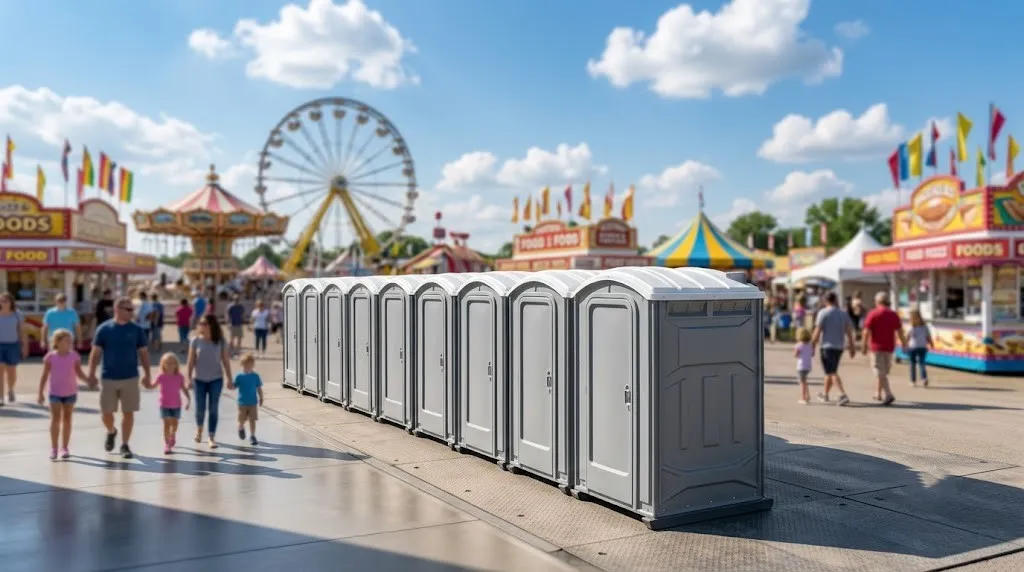
How many restrooms does a county fair need in Boston?
Start with headcount, not guesswork. A single-day fair pulling a few hundred people can often run on a cluster of standard porta potty rental units, but a multi-day fair with food vendors, a midway and grandstand seating needs a real count. OSHA 1926.51(c) sets a baseline of 1 toilet for 20 workers or fewer on a jobsite, and fair organizers in Boston use the same ratio as a starting point for attendees, scaling up fast once crowds pass a few thousand. ADA Standards section 213.2 requires that at least 5 percent of any cluster of single-user units be accessible, never fewer than one, so if you place twenty standard units you need at least one ADA accessible porta potty in that group. Fairs with grandstands or beer gardens often add a few deluxe flushable porta potty units near VIP seating, since flush units handle heavier repeat use better over a long day. If you are not sure where to start, the how many porta potties do I need guide walks through the math by attendance and event length, and porta potty placement guide covers spacing them across a fairground so lines do not bottleneck at one gate.
Standard units run $200 to $800 for an event-length rental depending on count and duration, and a weekend booking for a two or three day fair typically lands in the $125 to $400 range per unit. Larger fairs pair standard units with a restroom trailer rental, and a 4 stall or 8 stall trailer handles the queue at a midway entrance better than a long row of single units.
| unit | duration | typical price |
|---|---|---|
| standard | event | $400 |
| standard | weekend | $250 |
| ada | weekend | $240 |
| trailer | event | $3,500 |
Where should restrooms go at a fairground?
Placement decides whether your fair runs smooth or generates complaints by noon. Units need a stable, firm and slip resistant surface under ADA Standards section 302.1, which rules out soft turf or loose gravel near a midway ride. Keep a 36 inch clear route to every unit per ADA Standards section 403.5.1, and make sure any accessible unit has a door opening at least 32 inches wide under ADA Standards section 404.2.3, with a 60 inch turning circle inside per ADA Standards section 304.3.1. Fairground layouts in Boston usually cluster restrooms near food vendor rows, near the main gate, and again near grandstand or stage areas so nobody walks more than a couple minutes. A porta john rental cluster works well near food trucks since that is where lines form fastest.
Delivery trucks need about 60 feet of straight clearance behind them to drop a roll-off or a trailer, so plan drop zones before the fair layout gets finalized, not after. If your event runs food service, pair restrooms with a handwashing station rental or portable sink rental near every vendor row; 29 CFR 1910.141(d)(2) requires soap and towels or a hand drying device at washing stations, and hand sanitizer alone does not satisfy that. Fairs running livestock exhibits or 4-H barns should look at farm and agricultural restrooms for units built for that traffic pattern. Waste needs a plan too: a roll-off dumpster rental or two keeps vendor trash and food waste off the midway, and temporary fence rental sections off restroom zones from ride queues.
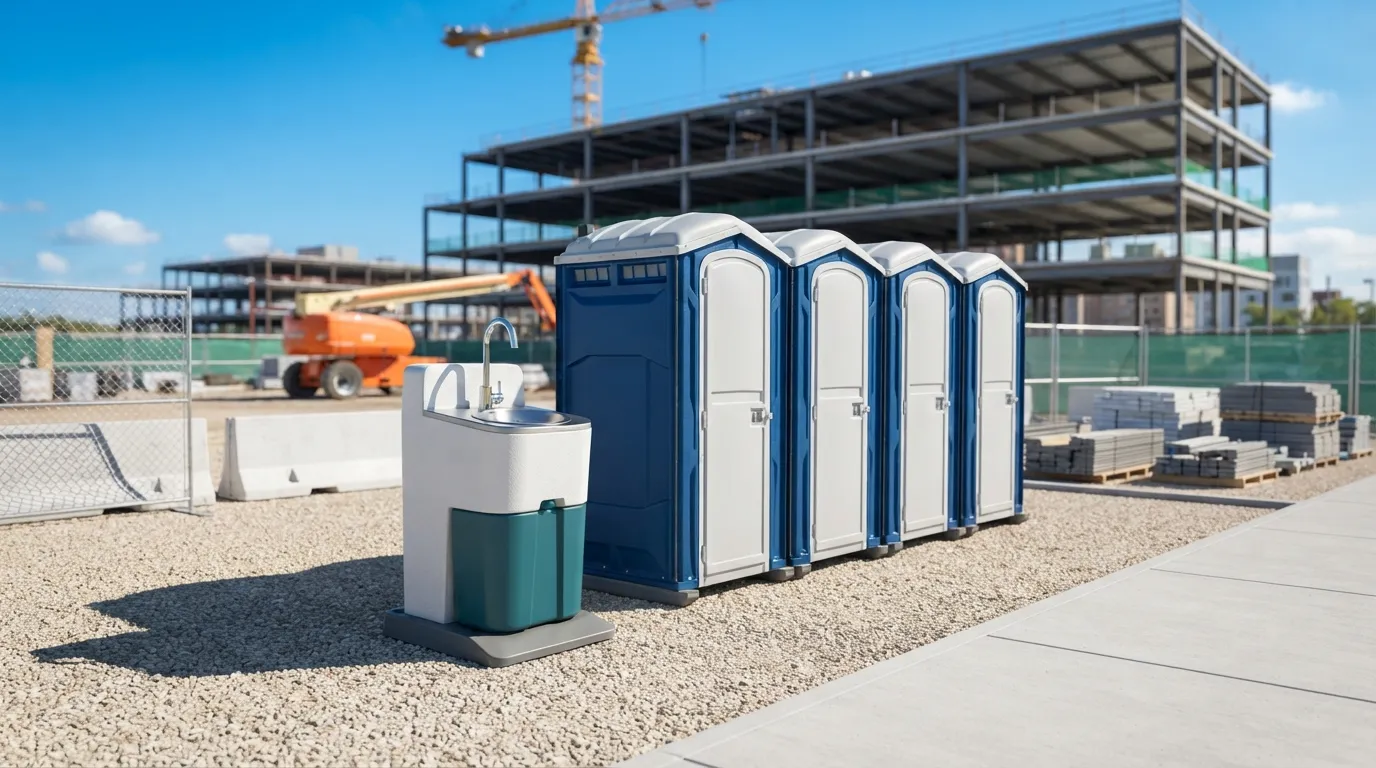
Do I need permits for portable restrooms at a Boston fair?
Placement in a public right of way, a city park, or a permitted event lot needs confirming with the City of Boston before delivery trucks show up. Permit rules vary by venue and by street closure plan, and none of that is standardized enough to quote here without checking first. The porta potty permit requirements page covers what to ask about, and dumpster permit requirements matters too if your fair needs a roll-off parked curbside. Booking early gives Boston Porta Pros time to confirm placement with the right department before your event date locks in.
How far in advance should I book restrooms for a county fair?
Book 4 to 6 weeks out for a fair pulling more than a thousand people, since trailers and ADA units book up fastest. Smaller single-day fairs can often book 2 weeks out. Use request a quote to lock in count and delivery date together.
Can I get a restroom trailer instead of standalone units?
Yes. A 2 stall restroom trailer or 4 stall restroom trailer handles higher traffic with flush fixtures and running water, and works well for fairs with a paid VIP area or a beer garden.
How often are units serviced during a multi-day fair?
ANSI/PSAI Z4.3 sets a baseline of one service visit per week for up to 10 users over a 40 hour week, but multi-day fairs with heavy traffic get serviced daily. Ask about a service schedule when you book.
What if my fair is in Everett or Cambridge instead of Boston proper?
Boston Porta Pros covers Everett, about 7.3 miles north, and Cambridge, about 7.6 miles northwest, along with other towns on the service areas page. Delivery distance affects lead time, not availability.
Do fairgrounds need handwashing stations separate from restrooms?
Yes, especially near food vendors. 29 CFR 1910.141(d)(2) requires soap and a drying method at wash stations, which standalone sanitizer stands do not meet. See handwashing station requirements for setup details.
Next step
Get a delivery date
Tell us the address, the dates and the headcount. We size the order and confirm the route.