
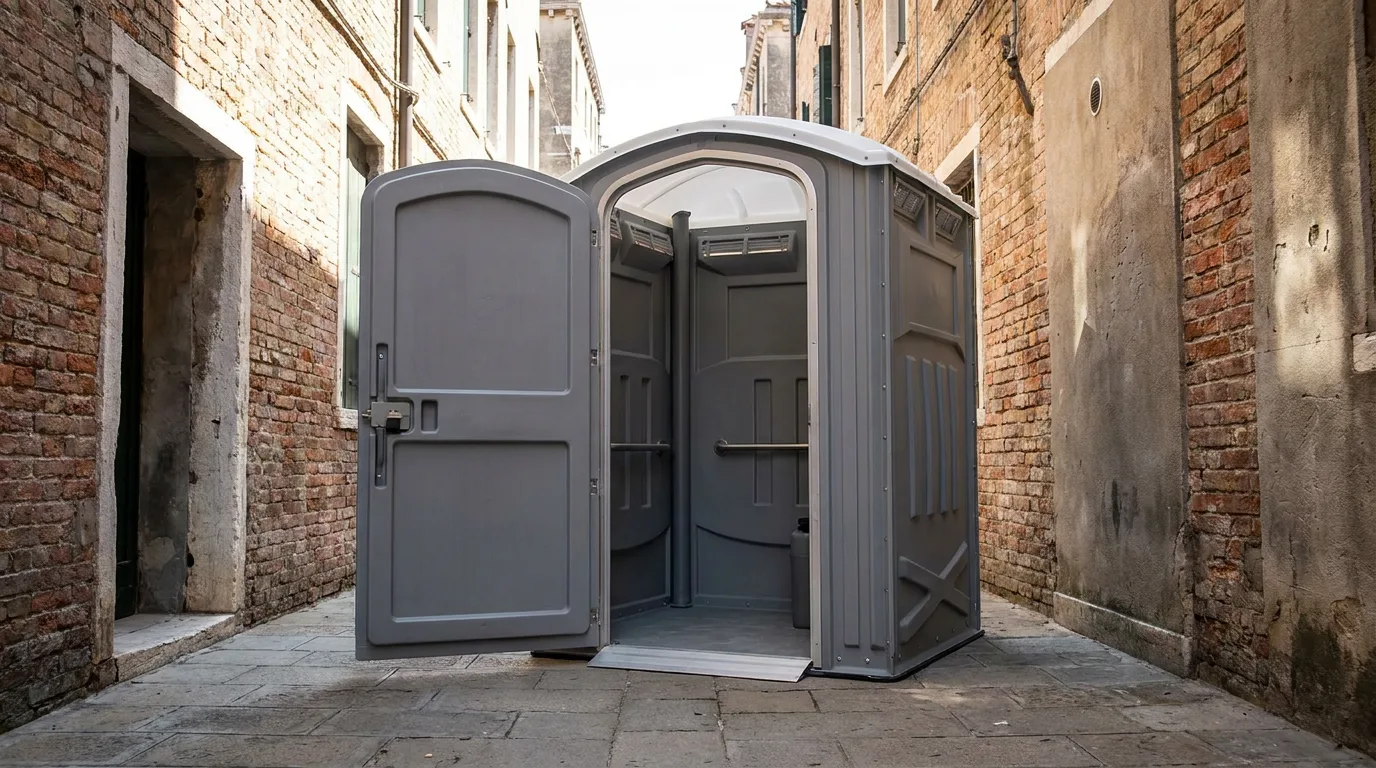
What Makes a Porta Potty ADA Compliant?
An ADA unit is bigger than a standard porta potty rental, and the extra room isn't optional dressing, it's the whole point. ADA Standards section 304.3.1 calls for a 60 inch turning circle inside, which means the footprint has to grow past the standard 44 by 48 inch base most units in Boston use. The door opening matters too: ADA Standards section 404.2.3 sets a 32 inch minimum clear width, wider than what you'll find on a standard model. Grab bars, a raised seat, and a latch you can work without tight grasping or pinching, per ADA Standards section 309.4, round out the unit. Boston Porta Pros stocks ADA accessible porta potty units built to these dimensions, and they cost more than a standard rental because of the added materials and floor space. If you're comparing options for a general contract job, our portable toilet rental page breaks down every unit type side by side.
How Many ADA Units Do I Need for My Site?
You need at least one accessible unit per cluster of standard toilets, and that number doesn't shrink even if you're only placing two or three units total. ADA Standards section 213.2 is explicit about the floor: never fewer than one accessible unit, regardless of cluster size. On a construction site in Boston, this stacks on top of OSHA 1926.51(c), which sets toilet counts by crew size, one facility for 20 workers or fewer, then a seat and urinal per 40 workers above that, scaling again at 200 workers. Run both rules together. If you're staffing a 45 person crew, you're already past the OSHA threshold for a second facility, and at least one unit in that group needs to meet ADA specs. Our how many porta potties do I need guide walks through the math by crew size, and the OSHA portable toilet requirements page covers the federal side in more depth.
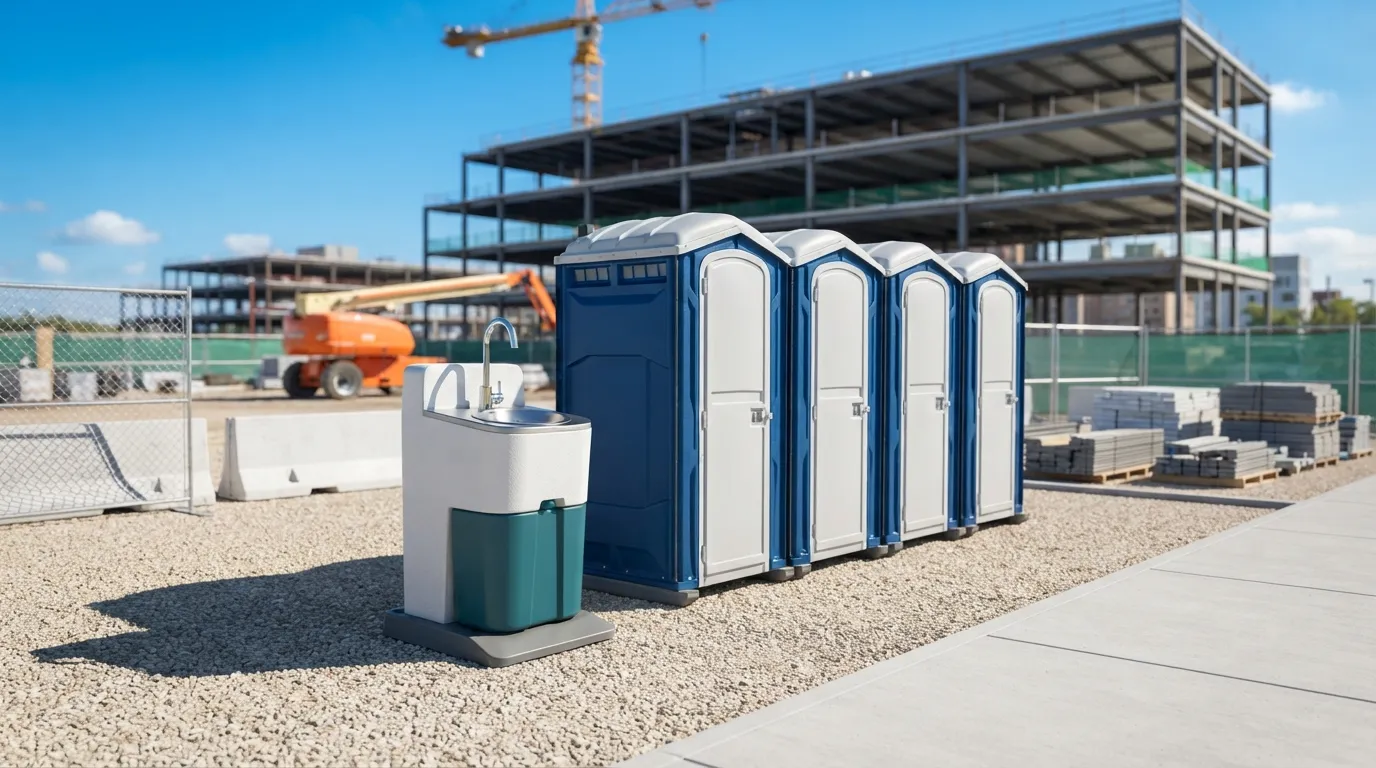
Where Should ADA Units Be Placed on Site?
Placement is where most sites lose compliance without realizing it. ADA Standards section 403.5.1 requires a 36 inch clear route to and from the unit, and that path has to stay clear, not just clear on delivery day. ADA Standards section 302.1 adds that the ground surface itself has to be stable, firm and slip resistant, which rules out loose gravel or soft turf as a landing pad in a lot of Boston settings. If the route to the unit crosses a curb or grade change, ADA Standards section 405.2 caps any ramp at a 1:12 slope, so a six inch rise needs six feet of ramp, not a plywood board leaned at an angle. Reach range matters at the unit itself too: ADA Standards section 308.2.1 sets a 48 inch maximum and 15 inch minimum forward reach for anything you're expected to operate, like a sanitizer pump or a paper towel dispenser. Our porta potty placement guide covers grading and access in more detail, and if you're planning for winter conditions on a Boston site, the porta potty in winter page addresses ice and footing separately.
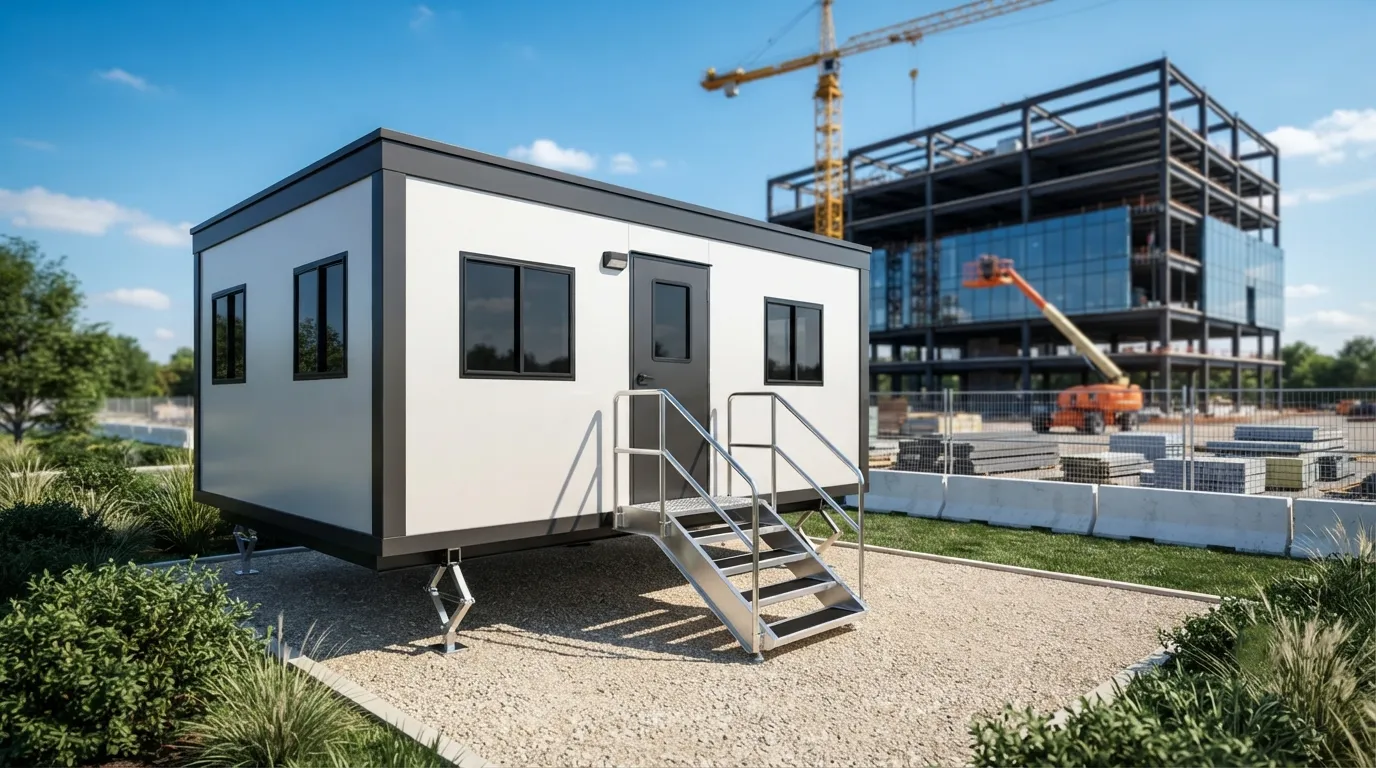
Do Event Sites in Boston Have Different ADA Rules?
Events follow the same core standards as construction sites, but the crowd size and layout change how many accessible units you actually need. A wedding with 150 guests spread across a tent has different traffic patterns than a festival with a single entrance funnel, and your accessible units need to sit on the route people actually walk, not just somewhere convenient for delivery. Boston Porta Pros sets up ADA units for event restroom rental jobs, wedding restroom rental sites, and larger jobs like festival restroom rental and marathon and race restrooms. For race events specifically, station placement along the course matters as much as unit count, since ADA Standards section 213.2 still applies at every cluster point, not just the main restroom bank. If your event is smaller and you're weighing a single deluxe unit against a standard cluster, the deluxe flushable porta potty page compares the options directly.
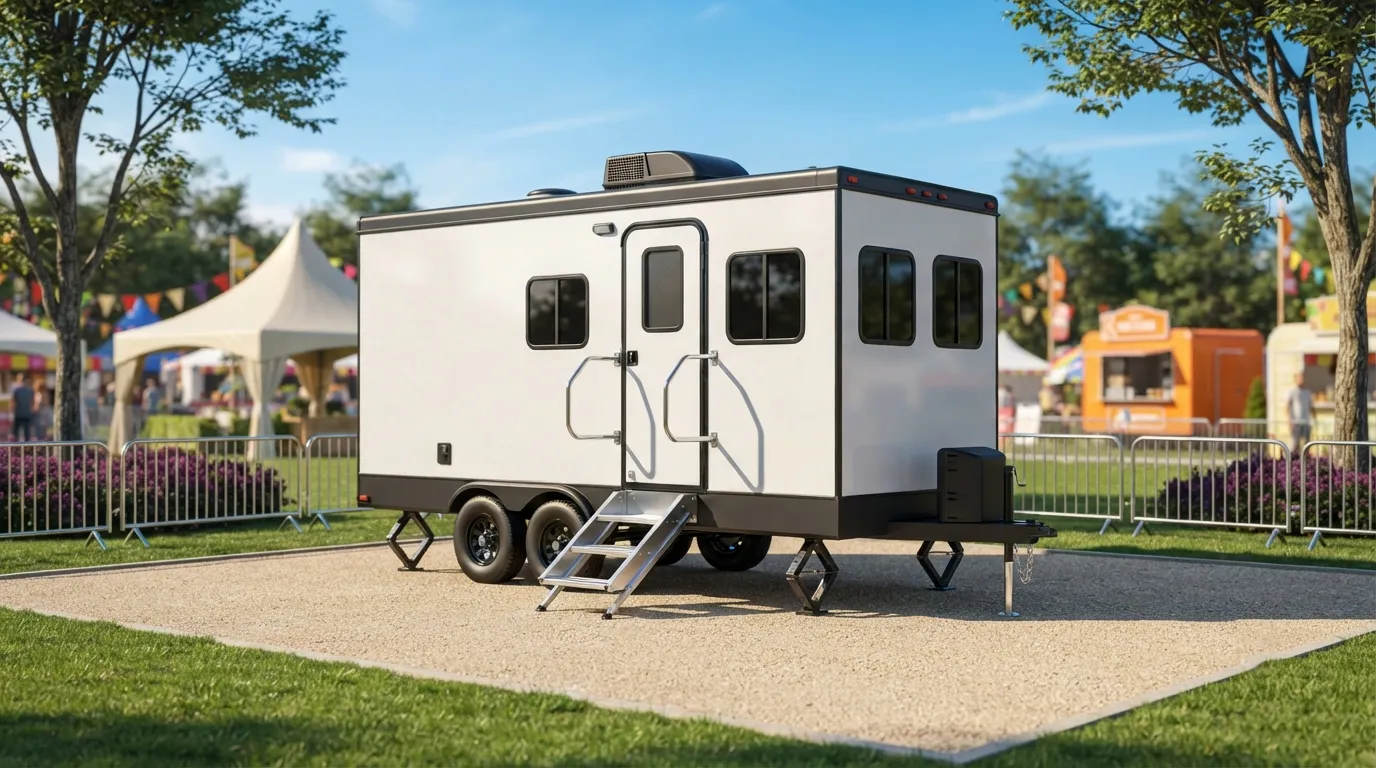
ADA Unit Pricing in Boston
| duration | low | typical | high |
|---|---|---|---|
| day | $200 | $230 | $400 |
| week | $120 | $185 | $240 |
Weekly rentals run lower per day than single-day bookings because the delivery cost spreads across more days of use. Full breakdowns by rental length live on our porta potty rental cost and porta potty rental per day pages, and if your job runs long-term, monthly porta potty rental covers extended pricing.
Do I need an ADA unit if I'm only renting one porta potty for a small job?
Yes, if that's your only unit, it still needs to meet accessible standards under section 213.2, since a lone unit counts as its own cluster. There's no size threshold that exempts a single-unit rental in Boston or anywhere else covered by these standards.
How wide does the path to an ADA porta potty need to be?
ADA Standards section 403.5.1 sets a 36 inch minimum clear width for the route. That path has to stay open the whole rental period, not just on delivery day, so keep equipment and debris off it.
Can I place an ADA unit on gravel or grass?
Only if the surface stays stable, firm and slip resistant, per ADA Standards section 302.1. Loose gravel or soft ground usually fails that test, so a leveled pad or mats are worth planning for ahead of delivery.
What's the difference between an ADA unit and a standard unit?
ADA units have a wider 32 inch door opening, a 60 inch interior turning circle, and grab bars, versus the tighter footprint of a standard 44 by 48 inch unit. They're built for wheelchair access, not just extra elbow room.
Do construction sites in Boston need ADA units even with a small crew?
Yes. OSHA 1926.51(c) sets toilet counts by crew size starting at 20 workers, but ADA Standards section 213.2 requires at least one accessible unit in any cluster, independent of how small your crew is.
Next step
Get a delivery date
Tell us the address, the dates and the headcount. We size the order and confirm the route.